
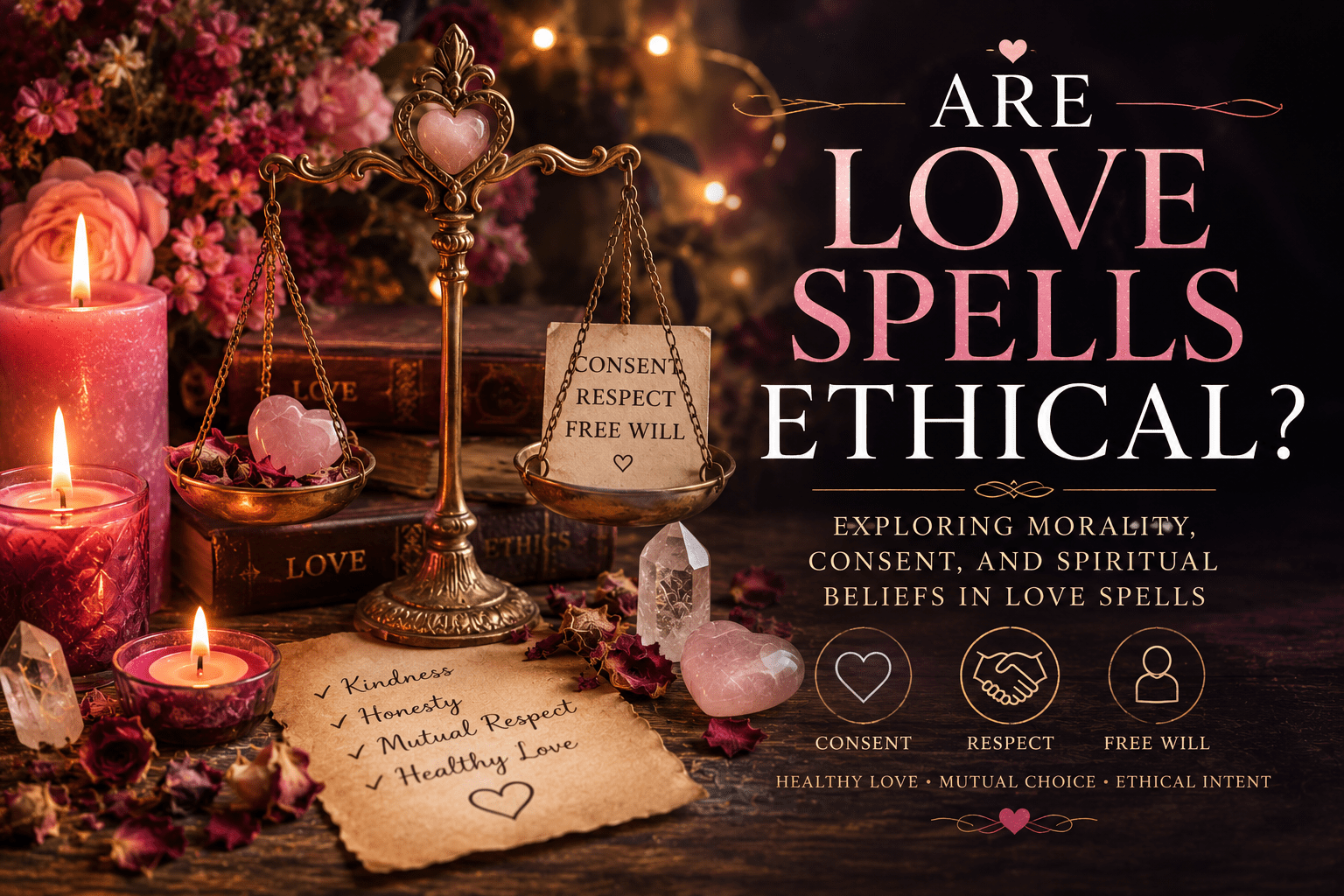
Love spells have been part of folklore and spiritual traditions for centuries, promising everything from attracting romance to rekindling lost relationships. While many people are curious about these practices, one important question often arises: Are love spells ethical?
The answer depends largely on personal beliefs, spiritual traditions, and how the ritual is intended to be used. Most modern spiritual practitioners agree that healthy relationships should be based on mutual respect, free will, trust, and consent rather than attempts to control another person’s emotions.
This article explores the ethics of love spells, different viewpoints, and healthier alternatives for those seeking love and meaningful relationships.
What Are Love Spells?
Love spells are rituals, prayers, affirmations, or symbolic practices that people perform with the intention of attracting love, strengthening relationships, or encouraging emotional healing.
Depending on the tradition, they may involve:
- Candles
- Herbs
- Flowers
- Crystals
- Written intentions
- Prayer
- Meditation
- Sacred symbols
Some people believe these rituals influence spiritual energy, while others see them as personal practices that encourage mindfulness, confidence, and emotional clarity.
Why Is the Ethics of Love Spells Debated?
The ethical debate centers on one important question:
Is it right to try to influence another person’s romantic feelings?
Healthy relationships depend on both people making free and informed choices. If a practice is intended to override or manipulate another person’s emotions, many people view it as ethically problematic.
The Importance of Consent
Consent is one of the most significant ethical considerations in any romantic relationship.
Healthy love includes:
- Mutual attraction
- Honest communication
- Respect
- Trust
- Personal choice
A relationship built without these qualities is unlikely to be healthy or lasting.
Many modern spiritual teachers recommend focusing rituals on attracting compatible relationships rather than attempting to change the feelings of a specific individual.
Different Perspectives on Love Spell Ethics
1. Spiritual Perspective
Some spiritual traditions believe intentions carry great importance.
Practices centered on:
- Self-love
- Healing
- Gratitude
- Emotional growth
- Positive energy
are often viewed more favorably than rituals intended to control someone else’s choices.
2. Psychological Perspective
From a psychological standpoint, rituals can sometimes help individuals:
- Process emotions
- Build confidence
- Develop hope
- Reduce anxiety
- Clarify personal goals
However, there is no scientific evidence that love spells can supernaturally change another person’s feelings or decisions.
3. Religious Perspective
Many religions encourage prayer, compassion, and ethical relationships while discouraging attempts to manipulate or control others through supernatural means.
Beliefs differ widely among faiths, so individual interpretations may vary.
Are Self-Love Rituals Ethical?
Many people consider self-love rituals to be among the most ethical spiritual practices because they focus entirely on personal growth.
Common goals include:
- Improving confidence
- Emotional healing
- Self-respect
- Inner peace
- Personal development
Rather than changing another person, these rituals encourage becoming the best version of yourself.
Ethical Love Practices
If someone chooses to participate in spiritual love rituals, many practitioners recommend focusing on intentions such as:
Attracting Compatible Love
Rather than targeting one individual, the intention is to welcome a healthy relationship into your life.
Healing Emotional Pain
After heartbreak, rituals centered on forgiveness and recovery may help support emotional well-being.
Strengthening Existing Relationships
Couples may use symbolic rituals to celebrate commitment, gratitude, and shared goals.
Potential Ethical Concerns
Some practices raise moral concerns when they attempt to:
- Control another person’s emotions
- Override personal choice
- Create emotional dependence
- Ignore clearly expressed boundaries
- Encourage unhealthy attachment
Healthy relationships require willing participation from both partners.
Better Alternatives to Love Spells
If your goal is a fulfilling relationship, consider combining personal spirituality with practical steps.
Practice Self-Improvement
Focus on becoming emotionally healthy and confident.
Communicate Honestly
Open, respectful communication builds stronger relationships than attempts to influence someone’s feelings indirectly.
Respect Boundaries
Accepting another person’s choices is an important part of healthy love.
Build Genuine Connections
Spend time getting to know people naturally through shared interests and meaningful conversations.
Pray or Meditate
Many people find comfort in prayer or meditation that asks for wisdom, patience, and guidance rather than control over another person.
Common Myths About Love Spells
Myth 1: Love Spells Can Force Someone to Fall in Love
There is no reliable scientific evidence supporting this claim.
Myth 2: Every Spiritual Tradition Supports Love Spells
Different cultures and religions have widely different beliefs regarding spiritual rituals and relationships.
Myth 3: Love Spells Always Have Negative Consequences
Not all rituals are intended to manipulate others. Practices focused on self-reflection, gratitude, or emotional healing are generally viewed differently from attempts to control another person’s choices.
Frequently Asked Questions
Are love spells morally wrong?
Opinions vary. Many people believe practices intended to control another person’s emotions raise ethical concerns, while self-love and healing rituals are generally considered more ethically acceptable.
Is it ethical to perform a love spell on someone without their knowledge?
Many ethicists and spiritual practitioners argue that attempting to influence someone’s romantic feelings without their consent is ethically questionable because it conflicts with respect for personal autonomy.
Are self-love rituals ethical?
Yes. Rituals focused on confidence, emotional healing, gratitude, and personal growth are widely regarded as ethical because they focus on the individual performing them rather than trying to change another person.
What is the healthiest way to attract love?
Building confidence, maintaining honest communication, respecting boundaries, and seeking compatible relationships are healthier and more sustainable approaches than attempting to influence another person’s emotions.
Final Thoughts
The question “Are love spells ethical?” has no single answer because beliefs differ across cultures, spiritual traditions, and individuals. However, there is broad agreement on one principle: healthy relationships thrive on mutual respect, trust, consent, and free choice.
Whether you view love spells as symbolic rituals or matters of personal faith, the most constructive practices are those that encourage self-improvement, emotional healing, and openness to healthy relationships rather than attempting to control another person’s feelings.
By focusing on kindness, personal growth, and meaningful communication, you can build stronger relationships based on genuine connection and mutual respect.
FAQ’S
Q1. Are love spells ethical?
Many people believe that rituals focused on self-love, healing, and attracting compatible relationships are more ethical than those intended to influence a specific person’s feelings.
Q2. Can love spells control another person’s emotions?
There is no scientific evidence that love spells can supernaturally control another person’s emotions or choices.
Q3. Are self-love rituals considered ethical?
Yes. Self-love rituals generally focus on personal growth, confidence, and emotional well-being rather than influencing others.
Q4. What are ethical alternatives to love spells?
Ethical alternatives include self-improvement, open communication, respecting boundaries, counseling when needed, and prayer or meditation focused on personal guidance.