
Stress and anxiety are experiences that almost everyone faces at some point in life. Whether the cause is family problems, financial hardship, health concerns, work pressure, or uncertainty about the future, these emotions can feel overwhelming. Islam acknowledges that believers will face trials, but it also provides hope, comfort, and practical guidance. I believe one of the greatest blessings Allah (SWT) has given us is the ability to turn to Him through sincere dua. A heartfelt dua for stress and anxiety reminds us that Allah is always near, hears every prayer, and is the ultimate source of peace and relief. While dua strengthens the heart spiritually, Islam also encourages seeking appropriate medical or mental health support when needed.
The Quran teaches that true tranquility comes from remembering Allah. When we combine prayer, patience, trust in Allah (tawakkul), and positive action, we can face life’s challenges with greater confidence and hope.
In this guide, I will share authentic Islamic duas for stress and anxiety, Quranic verses that bring peace, and practical ways to strengthen your faith during difficult times.
What Does Islam Say About Stress and Anxiety?
Islam recognises that hardship is part of life. Every believer experiences moments of sadness, fear, uncertainty, and emotional pain. These trials are not signs that Allah has abandoned us. Rather, they can become opportunities to grow in patience, faith, and reliance upon Him.
Allah says in the Quran:
“And We will surely test you with something of fear and hunger and a loss of wealth and lives and fruits, but give good tidings to the patient.”
(Surah Al-Baqarah 2:155)
This verse reminds us that difficulties are part of our journey, but Allah promises glad tidings to those who remain patient and trust Him.
Feeling stressed or anxious does not mean your faith is weak. Even the Prophets faced moments of hardship, grief, and concern while continuing to place their trust in Allah.
Can Dua Help with Stress and Anxiety?
Yes.
Dua is one of the greatest acts of worship because it allows believers to pour out their hearts to Allah without fear or hesitation. Through dua, we acknowledge that Allah alone has complete knowledge of our struggles and the power to bring relief.
Making dua can help us:
- Strengthen our connection with Allah.
- Replace fear with hope.
- Increase patience during hardship.
- Find emotional comfort through remembrance of Allah.
- Develop trust in Allah’s wisdom and timing.
- Calm the heart during uncertainty.
At the same time, Islam encourages believers to seek lawful means of support. If stress or anxiety becomes severe or persistent, consulting a qualified healthcare or mental health professional is consistent with Islamic teachings and does not contradict trusting Allah.
The Quran on Finding Peace
Allah reminds believers that true peace is found in remembering Him.
He says:
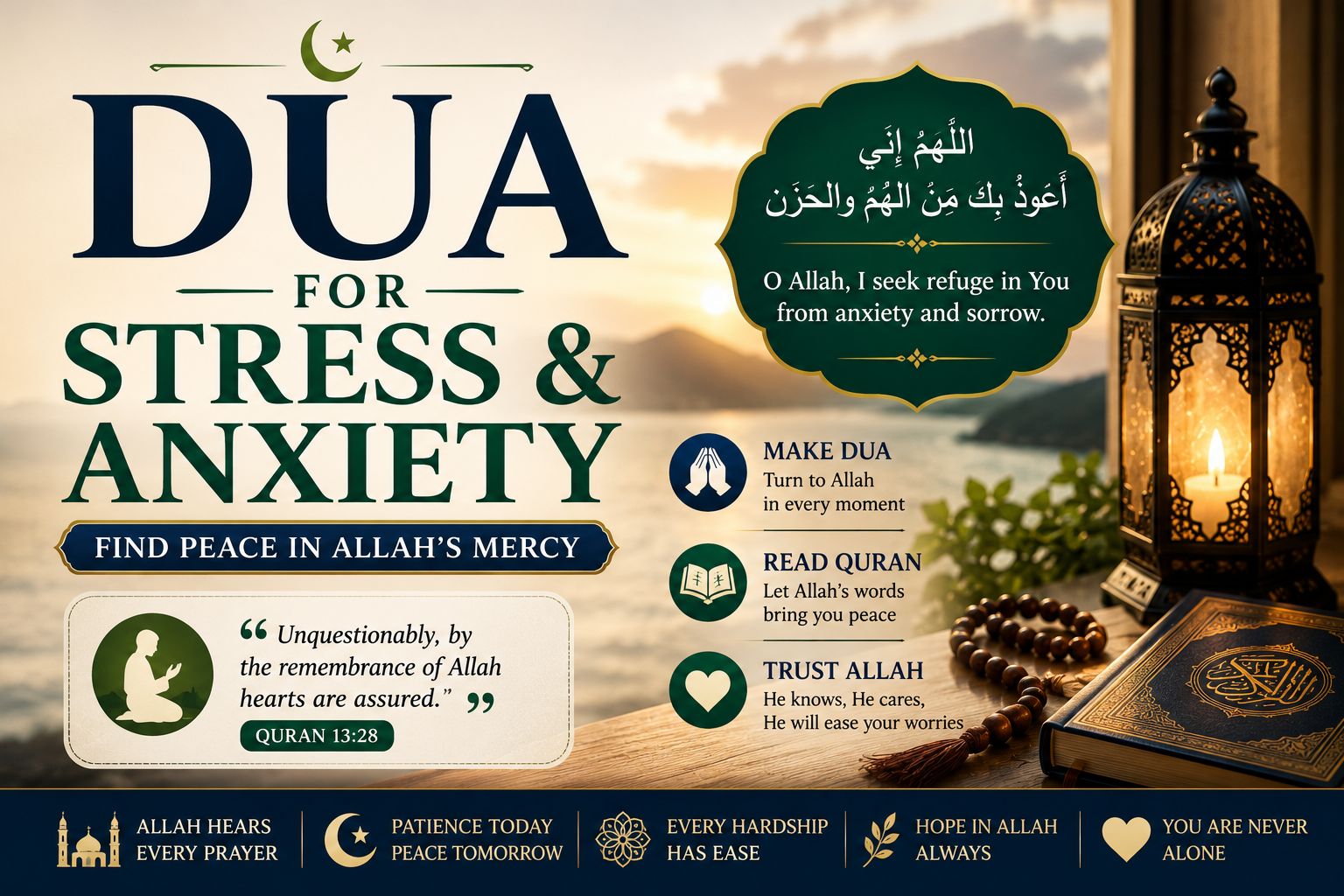
“Unquestionably, by the remembrance of Allah hearts are assured.”
(Surah Ar-Ra’d 13:28)
This beautiful verse is one of the greatest sources of comfort for Muslims experiencing stress or anxiety.
Regular remembrance of Allah through dhikr, Quran recitation, and dua helps calm the heart and strengthen faith.
Powerful Dua for Stress and Anxiety
One of the most beautiful ways to seek relief is to sincerely ask Allah in your own words.
Dua
“O Allah, You know every worry hidden within my heart and every burden that weighs upon my soul. Please replace my fear with peace, my sadness with hope, and my weakness with strength. Grant me patience during hardship, guide me toward what is best, and fill my heart with complete trust in Your mercy. Protect me from despair, bless me with emotional and spiritual healing, and make every difficulty a means of drawing closer to You. Indeed, You are the Most Merciful and the Best of Helpers. Ameen.”
Authentic Dua for Anxiety
One of the authentic supplications taught by the Prophet Muhammad ﷺ is:
Arabic
اللَّهُمَّ إِنِّي أَعُوذُ بِكَ مِنَ الْهَمِّ وَالْحَزَنِ، وَأَعُوذُ بِكَ مِنَ الْعَجْزِ وَالْكَسَلِ، وَأَعُوذُ بِكَ مِنَ الْجُبْنِ وَالْبُخْلِ، وَأَعُوذُ بِكَ مِنْ غَلَبَةِ الدَّيْنِ وَقَهْرِ الرِّجَالِ
Transliteration
Allahumma inni a’udhu bika minal-hammi wal-hazan, wa a’udhu bika minal-‘ajzi wal-kasal, wa a’udhu bika minal-jubni wal-bukhl, wa a’udhu bika min ghalabatid-dayni wa qahrir-rijal.
Meaning
“O Allah, I seek refuge in You from anxiety and sorrow, weakness and laziness, miserliness and cowardice, the burden of debt, and from being overpowered by others.”
This authentic dua is one of the most recommended supplications for anyone experiencing worry or emotional distress.
Dua of Prophet Yunus (AS)
One of the most powerful duas in the Quran is the supplication made by Prophet Yunus (Jonah) عليه السلام while he was in the belly of the whale.
Arabic
لَا إِلَٰهَ إِلَّا أَنتَ سُبْحَانَكَ إِنِّي كُنتُ مِنَ الظَّالِمِينَ
Transliteration
La ilaha illa Anta, Subhanaka inni kuntu minaz-zalimin.
Meaning
“There is no god except You. Glory be to You. Indeed, I have been among the wrongdoers.”
This dua is a beautiful reminder to turn to Allah with humility and hope during times of distress.
Dua for Patience During Hardship
Patience (Sabr) is one of the greatest qualities encouraged in Islam.
You may pray:
“O Allah, grant me patience during every hardship, strengthen my faith when I feel weak, guide my heart toward peace, and help me trust Your wisdom even when I do not understand my circumstances. Let every difficulty become a means of drawing closer to You. Ameen.”
Quranic Verses That Bring Comfort
Reading and reflecting on the Quran can bring reassurance during anxious moments.
Surah Ash-Sharh (94:5–6)
“Indeed, with hardship comes ease. Indeed, with hardship comes ease.”
Allah repeats this promise to remind believers that difficulties are never permanent.
Surah Al-Baqarah (2:286)
“Allah does not burden a soul beyond that it can bear.”
This verse reassures us that every trial we face is within Allah’s knowledge and wisdom.
Surah At-Talaq (65:2–3)
“And whoever fears Allah—He will make for him a way out and provide for him from where he does not expect.”
These verses encourage believers to trust Allah even when the future seems uncertain.
Surah Al-Inshirah
Surah Al-Inshirah is often recited during times of difficulty because it reminds believers that relief accompanies hardship and that Allah eases the burdens of those who trust Him.
The Importance of Tawakkul (Trust in Allah)
Tawakkul means placing complete trust in Allah while continuing to take lawful and practical steps.
Trusting Allah does not mean remaining inactive. Instead, believers are encouraged to:
- Pray sincerely.
- Work hard.
- Seek beneficial knowledge.
- Ask for help when needed.
- Accept Allah’s decree with patience.
When we combine effort with trust in Allah, we develop resilience and inner peace.
Remembering Allah Through Dhikr
Dhikr (the remembrance of Allah) is one of the most effective ways to calm the heart.
Simple phrases such as:
- SubhanAllah (Glory be to Allah)
- Alhamdulillah (All praise is due to Allah)
- Allahu Akbar (Allah is the Greatest)
- La ilaha illallah (There is no god but Allah)
- Astaghfirullah (I seek Allah’s forgiveness)
can be repeated throughout the day to bring comfort and strengthen faith.
Even a few moments of sincere remembrance can help shift our focus from fear to hope.
Why Hope in Allah Matters
Stress and anxiety often make us feel trapped by our circumstances. Islam teaches the opposite. No matter how difficult life becomes, Allah’s mercy is always greater than our worries.
Every sincere prayer is heard, every tear is known to Allah, and every hardship carries wisdom, even if we cannot see it immediately.
By maintaining hope, making dua, and remembering Allah consistently, believers can find peace that goes beyond changing circumstances.
How to Cope with Stress and Anxiety According to Islam
Islam offers a balanced approach to dealing with emotional struggles. While making dua is essential, believers are also encouraged to take practical steps to care for their physical, emotional, and spiritual well-being.
The Prophet Muhammad ﷺ taught Muslims to trust Allah while making use of lawful means available to them. This includes seeking support from family, consulting healthcare professionals when needed, and maintaining healthy daily habits alongside worship.
When stress feels overwhelming, remember that asking for help is not a sign of weak faith. Islam encourages believers to seek beneficial treatment while placing their ultimate trust in Allah.
The Power of Salah During Difficult Times
One of the greatest sources of comfort for a believer is Salah (prayer).
Every time we stand before Allah, we leave behind our worries and remind ourselves that He controls every situation.
Allah says:
“Seek help through patience and prayer. Indeed, it is difficult except for the humbly submissive.”
(Surah Al-Baqarah 2:45)
Performing the five daily prayers with sincerity helps:
- Strengthen faith.
- Reduce feelings of loneliness.
- Bring emotional stability.
- Increase hope during hardship.
- Deepen reliance upon Allah.
Even when life feels uncertain, Salah reminds us that Allah is always near.
Reading the Quran for Peace of Mind
The Quran is described as a source of healing and mercy for believers.
Reading even a few verses every day can calm the heart and renew hope.
Many Muslims find comfort in regularly reciting:
- Surah Al-Fatihah
- Ayat al-Kursi (Surah Al-Baqarah 2:255)
- Surah Yasin
- Surah Ar-Rahman
- Surah Al-Mulk
- Surah Al-Inshirah
- Surah Ad-Duha
- Surah Al-Ikhlas
- Surah Al-Falaq
- Surah An-Nas
Rather than rushing through the recitation, reflect on the meanings and remember that Allah’s words bring guidance and reassurance.
Morning and Evening Adhkar
The Prophet Muhammad ﷺ taught many authentic morning and evening supplications that provide spiritual comfort and strengthen faith.
Making these adhkar part of your daily routine helps you:
- Begin the day with gratitude.
- End the day with peace.
- Increase remembrance of Allah.
- Develop consistency in worship.
- Build emotional resilience.
Even spending five to ten minutes in remembrance every morning and evening can positively affect your mindset.
Making Istighfar Regularly
Seeking Allah’s forgiveness is one of the most beneficial forms of worship.
The Prophet ﷺ frequently sought forgiveness despite being free from sin.
Saying:
Astaghfirullah
throughout the day reminds us of Allah’s mercy and encourages humility, hope, and spiritual renewal.
The Importance of Sabr (Patience)
Patience is not simply waiting for problems to disappear.
In Islam, Sabr means remaining steadfast, continuing to obey Allah, and trusting His wisdom even when life feels difficult.
Allah says:
“Indeed, Allah is with the patient.”
(Surah Al-Baqarah 2:153)
This promise reminds believers that they never face hardship alone.
Practical Wellbeing Tips Alongside Dua
Along with worship, taking care of your body and mind can help you manage stress in healthy ways.
Consider these practical habits:
- Get enough sleep each night.
- Eat nutritious meals.
- Stay physically active.
- Spend time with supportive family and friends.
- Limit unnecessary stress where possible.
- Take regular breaks from work or study.
- Spend time reflecting on Allah’s blessings.
- Practice gratitude every day.
These habits complement your spiritual life and support overall well-being.
When Should You Seek Professional Help?
While temporary stress is a normal part of life, persistent anxiety or emotional distress may require additional support.
If your anxiety:
- Continues for several weeks or months.
- Interferes with work, studies, or family life.
- Causes panic attacks or overwhelming fear.
- Leads to persistent sadness or hopelessness.
- Makes daily activities difficult.
consider speaking with a qualified doctor or mental health professional.
Seeking treatment is not contrary to Islam. The Prophet ﷺ encouraged believers to seek appropriate remedies while trusting Allah.
Common Misconceptions About Stress and Anxiety in Islam
Many misunderstandings can make people feel guilty about experiencing emotional struggles.
Stress Does Not Mean Weak Faith
Even the Prophets experienced grief, sadness, and hardship while remaining among Allah’s most beloved servants.
Experiencing anxiety does not mean that your faith is weak.
Dua Does Not Replace Practical Action
Prayer is powerful, but believers are also encouraged to take practical steps to improve their situation.
Faith and action work together.
Every Emotional Struggle Is Not a Spiritual Problem
Stress and anxiety can have many causes, including physical, emotional, psychological, or social factors.
Islam encourages balance and wisdom when understanding these experiences.
Allah Never Abandons His Servants
No matter how lonely you feel, Allah is always aware of your situation and hears every sincere prayer.
His mercy is greater than every hardship.
Daily Routine for Inner Peace
Developing a consistent routine can strengthen both your faith and emotional resilience.
A simple daily routine might include:
- Performing the five daily prayers on time.
- Reading a portion of the Quran each day.
- Reciting morning and evening adhkar.
- Making frequent Istighfar.
- Sending blessings upon the Prophet Muhammad ﷺ.
- Spending a few moments making personal dua.
- Reflecting on three blessings you are grateful for each day.
- Going to sleep after placing your worries in Allah’s hands.
Small acts of worship performed consistently often have a lasting impact on the heart.
Allah’s Mercy Is Greater Than Every Worry
One of the greatest comforts in Islam is knowing that Allah’s mercy is limitless.
Whatever burden you carry today, Allah knows it completely.
He hears every whispered prayer, sees every hidden tear, and understands every fear before you speak it.
Never lose hope in His mercy.
Every hardship is temporary, and every sincere dua is valuable in the sight of Allah.
Continue turning to Him with patience, hope, and trust.
Conclusion
A sincere dua for stress and anxiety is a powerful way to seek comfort, hope, and strength from Allah (SWT). Islam teaches that trials are a natural part of life, but believers are never left to face them alone. Through dua, Salah, Quran recitation, dhikr, and trust in Allah, we can find peace even during life’s most challenging moments.
At the same time, Islam encourages us to take practical steps to care for our emotional and physical well-being. Seeking support from trusted family members, healthcare professionals, or mental health specialists when needed is fully compatible with placing our trust in Allah.
No matter what you are facing today, remember that Allah is Ar-Rahman (The Most Merciful) and Al-Wakeel (The Best Disposer of Affairs). Keep your heart connected to Him, remain patient, and never lose hope in His mercy.
May Allah (SWT) remove your worries, ease your burdens, grant you patience, fill your heart with tranquillity, and bless you with lasting peace in this life and the Hereafter.
Ameen.
Frequently Asked Questions (FAQs)
1. What is the best dua for stress and anxiety?
One of the best authentic duas is:
Allahumma inni a’udhu bika minal-hammi wal-hazan…
It was taught by Prophet Muhammad ﷺ for relief from anxiety, sorrow, and hardship.
2. Can dua help reduce anxiety?
Yes. Dua strengthens a believer’s relationship with Allah and brings spiritual comfort, hope, and peace. It can be an important part of coping with anxiety, alongside practical support when needed.
3. Which Surah is best for stress and anxiety?
Many Muslims find comfort in reciting Surah Al-Inshirah, Surah Ad-Duha, Surah Ar-Rahman, Surah Yasin, Surah Al-Fatihah, and the final three chapters of the Quran.
4. What does the Quran say about finding peace?
Allah says:
“Unquestionably, by the remembrance of Allah hearts are assured.”
(Surah Ar-Ra’d 13:28)
5. Is it wrong for a Muslim to seek therapy for anxiety?
No. Seeking professional medical or mental health support is consistent with Islamic teachings while continuing to rely on Allah.
6. Can I make dua in my own language?
Yes. Alongside authentic supplications from the Quran and Sunnah, you may ask Allah sincerely in any language.
7. How often should I recite the morning and evening adhkar?
The Prophet ﷺ encouraged reciting them every morning after Fajr and every evening before sunset or after Asr.
8. Does anxiety mean my faith is weak?
No. Experiencing stress or anxiety does not indicate weak faith. Many righteous people experienced hardship while remaining devoted to Allah.
9. What daily habit brings the most peace?
Consistency in Salah, Quran recitation, dhikr, gratitude, and sincere dua can help cultivate lasting inner peace.
10. Can I combine medication with dua?
Yes. Islam encourages believers to seek lawful treatment while continuing to pray and trust Allah for healing.
11. How can I increase my trust in Allah during stressful times?
Strengthen your relationship with Allah through regular worship, reflection on the Quran, remembrance (dhikr), and patience, while taking practical steps to address your situation.
12. Will Allah answer my dua?
Allah hears every sincere supplication. He answers in the way that is best according to His perfect wisdom—whether by granting what you ask, delaying it for a better time, or replacing it with something better.