
The evil eye, known as nazar or al-‘ayn in Islam, is a real phenomenon mentioned in the Quran and authentic Hadith. It can occur when someone looks at another person with envy, excessive admiration without remembering Allah, or jealousy. While the evil eye is real, Muslims should never live in fear because Allah (SWT) is the Greatest Protector. I believe the best protection against nazar is to strengthen our relationship with Allah through sincere dua, regular recitation of the Quran, authentic Ruqyah, and complete trust in His mercy. A heartfelt dua for nazar brings peace to the heart and reminds us that no harm can reach us except by Allah’s permission.
Many people become anxious whenever they experience difficulties and immediately assume they are affected by the evil eye. However, Islam teaches us to remain balanced. While the evil eye exists, illnesses, emotional struggles, financial hardships, and personal challenges may also have natural causes. Therefore, Muslims should seek both spiritual protection through authentic Islamic teachings and appropriate medical care whenever necessary.
In this comprehensive guide, I will explain what Islam teaches about the evil eye, the best duas for protection, Quranic verses for Ruqyah, and practical ways to safeguard yourself and your family according to the Quran and Sunnah.
What Is Nazar (The Evil Eye) in Islam?
In Islam, nazar refers to harm that may occur through a person’s envious or admiring glance by Allah’s permission. It is not an independent force with unlimited power, nor should Muslims become overly fearful of it. Everything happens only by the will of Allah.
The Prophet Muhammad ﷺ confirmed that the evil eye is real.
He said:
“The evil eye is real.”
(Sahih al-Bukhari and Sahih Muslim)
This authentic Hadith makes it clear that Muslims should acknowledge the reality of the evil eye while placing complete trust in Allah’s protection.
The evil eye may result from jealousy, envy, or even admiration when Allah’s name is not remembered. This is why Muslims are encouraged to say phrases such as “Masha’Allah” and “Barakallahu feek” when admiring someone’s blessings.
Does the Quran Mention the Evil Eye?
Although the Quran does not explicitly use the phrase “evil eye” in many places, several verses are understood by scholars to refer to seeking Allah’s protection from envy and harm.
Allah says:
“And from the evil of the envier when he envies.”
This verse teaches believers to seek refuge in Allah from jealousy and every form of harm that may result from it.
Another verse says:
“And We send down of the Quran that which is healing and mercy for the believers.”
(Surah Al-Isra 17:82)
The Quran is therefore a source of spiritual healing and protection for those who recite it sincerely and act upon its guidance.
Can Dua Protect Against Nazar?
Yes.
One of the greatest protections against the evil eye is sincere dua combined with daily remembrance of Allah, regular Salah, and authentic Ruqyah.
Dua is not a magical formula. Rather, it is an act of worship through which we place our trust in Allah and ask Him to protect us from every form of visible and unseen harm.
When we recite authentic supplications taught by the Prophet ﷺ, we strengthen our faith and acknowledge that Allah alone controls every blessing and every trial.
Powerful Dua for Nazar
One of the most beautiful supplications for protection is to sincerely ask Allah in your own words while relying completely upon Him.
You may pray:
“O Allah, protect me and my family from every evil eye, every form of envy, and every hidden harm. Surround us with Your mercy, keep our hearts firm upon faith, bless us with good health and peace, and make the Holy Quran a source of healing and protection for us. Indeed, You are the Best Protector and the Most Merciful. Ameen.”
Personal supplication made with sincerity and humility is among the greatest acts of worship.
Authentic Dua for Protection from the Evil Eye
The Prophet Muhammad ﷺ frequently sought Allah’s protection through authentic supplications.
One well-known dua is:
Arabic
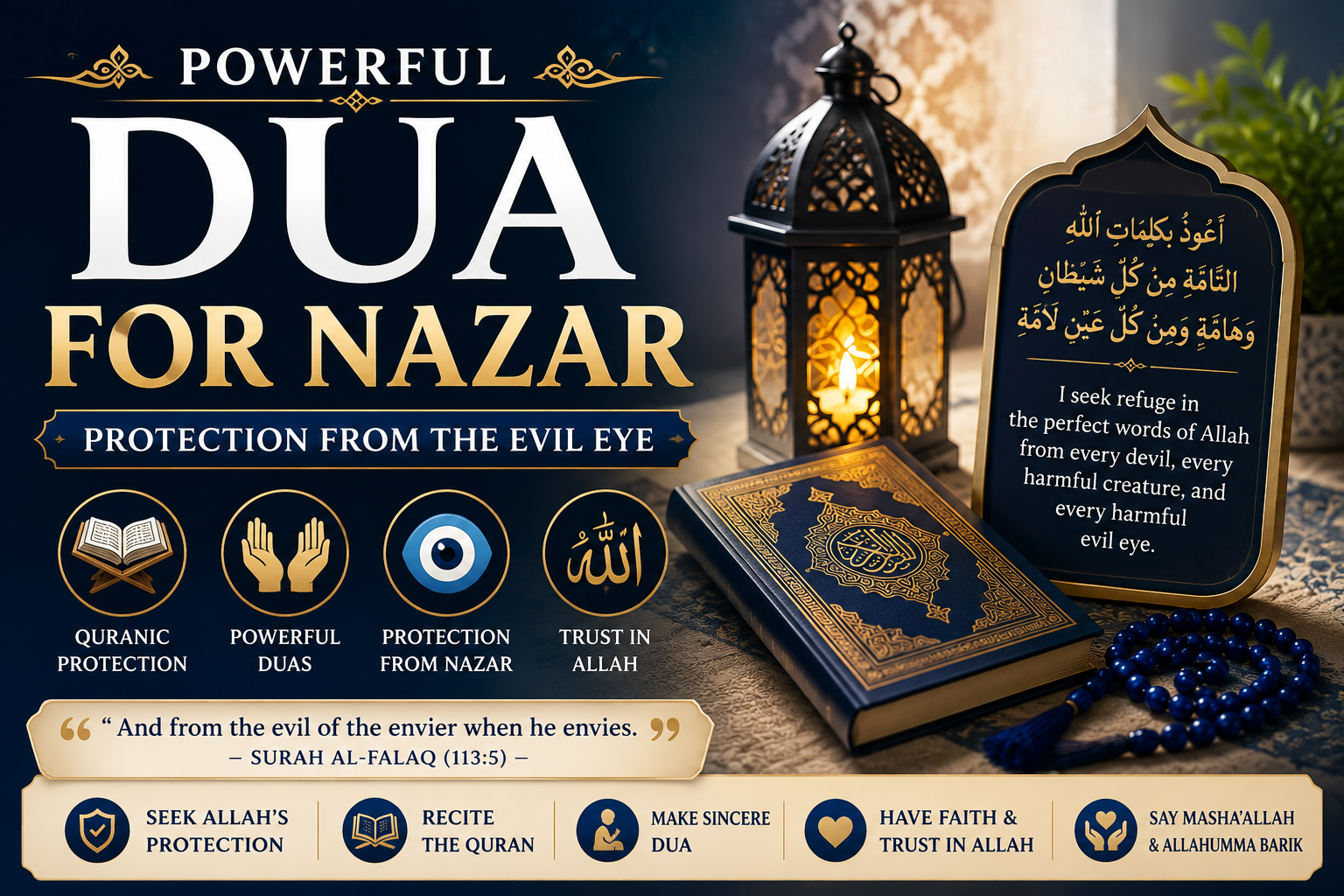
أَعُوذُ بِكَلِمَاتِ اللَّهِ التَّامَّاتِ مِنْ كُلِّ شَيْطَانٍ وَهَامَّةٍ وَمِنْ كُلِّ عَيْنٍ لَامَّةٍ
Transliteration
A’udhu bikalimatillahit-tammati min kulli shaytanin wa hammatin wa min kulli ‘aynin lammah.
Meaning
“I seek refuge in the perfect words of Allah from every devil, every poisonous creature, and every harmful evil eye.”
The Prophet ﷺ recited this supplication for his grandsons Hasan and Husayn, demonstrating its importance as a prayer for protection.
Dua When Admiring Someone
Islam teaches us to protect others from our own admiration by remembering Allah.
Whenever you admire someone’s beauty, children, home, success, wealth, or blessings, say:
مَا شَاءَ اللَّهُ
Masha’Allah
“What Allah has willed.”
Or say:
اللَّهُمَّ بَارِكْ لَهُ
Allahumma barik lahu
“O Allah, bless him.”
Or for a woman:
Allahumma barik laha
These beautiful expressions acknowledge that every blessing comes from Allah and ask Him to preserve it.
Best Quranic Surahs for Protection from Nazar
The Quran is the greatest source of healing and protection.
Several chapters are especially recommended for daily recitation.
Surah Al-Fatihah
Known as the Opening Chapter of the Quran, Surah Al-Fatihah is also used in Ruqyah because it is a prayer for guidance, mercy, and healing.
The companions of the Prophet ﷺ used it as Ruqyah with Allah’s permission.
Ayat al-Kursi
Ayat al-Kursi (Surah Al-Baqarah 2:255) is one of the greatest verses in the Quran.
The Prophet ﷺ taught that whoever recites it before sleeping remains under Allah’s protection until morning.
Many Muslims also recite it after each obligatory prayer.
Surah Al-Ikhlas
This Surah strengthens our belief in Allah’s absolute oneness and reminds us that only He deserves complete trust.
Surah Al-Falaq
Surah Al-Falaq specifically teaches believers to seek Allah’s protection from every form of external harm, including envy.
It includes the powerful verse:
“And from the evil of the envier when he envies.”
This verse is among the strongest Quranic supplications for protection from jealousy.
Surah An-Nas
Surah An-Nas asks Allah to protect believers from the whispers of Shaytan and hidden evil.
Together with Surah Al-Ikhlas and Surah Al-Falaq, it forms the Three Quls, which the Prophet ﷺ regularly recited for protection.
The Three Quls for Daily Protection
The Prophet Muhammad ﷺ recited:
- Surah Al-Ikhlas
- Surah Al-Falaq
- Surah An-Nas
every morning, every evening, and before sleeping.
According to authentic Hadith, he would recite these chapters three times, blow gently into his hands, and wipe them over his body.
This Sunnah remains one of the greatest daily protections against the evil eye, envy, and other forms of harm.
Morning and Evening Adhkar
Among the strongest protections against nazar are the authentic morning and evening remembrances taught by the Prophet ﷺ.
These daily supplications strengthen faith, increase remembrance of Allah, and provide spiritual comfort throughout the day.
Making these adhkar part of your routine is one of the easiest and most beneficial habits a Muslim can develop.
Daily Habits That Protect Against Nazar
Islam teaches that prevention begins with strengthening our relationship with Allah.
Some beneficial daily practices include:
- Performing the five daily prayers on time.
- Reading the Quran every day.
- Reciting morning and evening adhkar.
- Reading Ayat al-Kursi after each obligatory prayer.
- Reciting the Three Quls every morning and evening.
- Making frequent Istighfar (seeking forgiveness).
- Giving charity regularly.
- Placing complete trust in Allah.
- Avoiding sins and remembering Allah throughout the day.
These acts of worship invite Allah’s mercy and strengthen a believer’s spiritual protection.
Why Trust in Allah Is the Greatest Protection
The greatest lesson Islam teaches about nazar is that Allah alone controls all benefit and harm.
No jealous person, no evil eye, and no unseen force can overcome Allah’s decree.
When believers strengthen their faith through prayer, Quran recitation, remembrance, and obedience, fear gradually gives way to peace and confidence.
Rather than becoming anxious about the evil eye, Muslims should increase their worship, seek Allah’s protection sincerely, and trust that His mercy is greater than every difficulty.
How to Perform Ruqyah for Nazar at Home
One of the greatest blessings in Islam is that every Muslim can seek Allah’s protection directly through authentic Ruqyah. You do not need special powers or mysterious rituals. Ruqyah is simply the recitation of the Quran and authentic supplications while placing complete trust in Allah.
The Prophet Muhammad ﷺ practiced Ruqyah and encouraged Muslims to seek healing through the words of Allah.
You can perform self-Ruqyah by following these simple steps.
1. Make a Sincere Intention
Begin by sincerely intending to seek Allah’s protection from the evil eye. Remember that healing comes only from Allah, not from the person performing the Ruqyah.
2. Perform Wudu
Although it is not obligatory, being in a state of purity helps prepare your heart and mind for worship.
3. Recite Quranic Verses
Read the following chapters slowly while reflecting on their meanings:
- Surah Al-Fatihah
- Ayat al-Kursi (Surah Al-Baqarah 2:255)
- Surah Al-Ikhlas
- Surah Al-Falaq
- Surah An-Nas
Recite each with sincerity, asking Allah to remove every form of harm.
4. Blow Gently into Your Hands
Following the Sunnah, lightly blow into your hands after reciting the Quran and wipe them over your face and body.
5. Make Personal Dua
Ask Allah in your own words to protect you from the evil eye, envy, jealousy, and every hidden harm. Continue placing your complete trust in Him.
Practicing self-Ruqyah regularly is one of the most effective ways to seek Allah’s protection.
What Should You Do If You Think Someone Has Been Affected by Nazar?
If you believe that you or a family member may have been affected by the evil eye, avoid panic and remember that Allah is the Best Protector.
Instead of relying on superstitions or cultural practices, follow authentic Islamic guidance.
You should:
- Continue performing the five daily prayers.
- Increase Quran recitation.
- Perform self-Ruqyah regularly.
- Recite the Three Quls every morning and evening.
- Read Ayat al-Kursi daily.
- Make sincere dua asking Allah for healing.
- Increase remembrance of Allah (Dhikr).
- Seek medical treatment if symptoms may have a physical or psychological cause.
Islam teaches believers to combine spiritual practices with lawful practical means. Seeking professional medical advice when necessary does not contradict reliance on Allah.
Protection for Children from Nazar
Parents naturally want to protect their children from every type of harm. The Prophet Muhammad ﷺ taught a beautiful supplication that he used for his grandsons Hasan and Husayn.
Arabic
أُعِيذُكُمَا بِكَلِمَاتِ اللَّهِ التَّامَّةِ مِنْ كُلِّ شَيْطَانٍ وَهَامَّةٍ وَمِنْ كُلِّ عَيْنٍ لَامَّةٍ
Transliteration
U’idhukuma bikalimatillahit-tammati min kulli shaytanin wa hammatin wa min kulli ‘aynin lammah.
Meaning
“I seek protection for you in the perfect words of Allah from every devil, every harmful creature, and every harmful evil eye.”
Parents may recite this authentic dua over their children while trusting Allah to protect them.
Protection for the Home
A home in which Allah is remembered regularly becomes spiritually strong.
Some beneficial Sunnah practices include:
- Reciting Surah Al-Baqarah regularly.
- Performing Salah consistently.
- Reading the Quran aloud.
- Reciting morning and evening adhkar.
- Avoiding sinful activities inside the home.
- Remembering Allah before eating, sleeping, and leaving the house.
A home filled with worship brings peace, mercy, and blessings.
Common Mistakes People Make Regarding Nazar
Many cultural beliefs surrounding the evil eye have no basis in authentic Islam. Muslims should avoid practices that contradict the Quran and Sunnah.
Depending on Amulets or Charms
Many people wear bracelets, necklaces, blue-eye symbols, or other objects believing they provide protection.
Islam teaches that protection comes only from Allah, not from objects or symbols.
Visiting Fortune Tellers
The Prophet ﷺ strongly warned against visiting fortune tellers, magicians, or anyone claiming knowledge of the unseen.
True healing comes through Allah alone.
Living in Constant Fear
Some people blame every illness, financial problem, or disagreement on the evil eye.
While nazar is real, Islam encourages balance and wisdom. Many difficulties have natural causes that should also be addressed.
Ignoring Daily Worship
The strongest protection is not a special object or ritual but regular prayer, Quran recitation, and remembrance of Allah.
The Importance of Saying “Masha’Allah”
One of the beautiful teachings of Islam is remembering Allah whenever we admire someone’s blessings.
Whenever you see:
- A beautiful child
- A successful business
- A new home
- Good health
- Wealth
- Knowledge
- Any blessing
Say:
Masha’Allah
or
Allahumma barik
These simple words ask Allah to preserve the blessing and help prevent envy from harming others.
Teaching children this habit also strengthens their Islamic character.
Strengthening Your Faith Against Fear
Fear weakens the heart, but remembrance of Allah strengthens it.
Whenever anxiety about the evil eye enters your mind:
- Increase your Salah.
- Read more Quran.
- Make sincere dua.
- Remember Allah often.
- Keep good company.
- Trust Allah’s wisdom.
The more connected a believer becomes to Allah, the less power fear has over the heart.
Allah Alone Is the Best Protector
Allah says:
“And if Allah should touch you with harm, there is no one who can remove it except Him. And if He intends good for you, none can repel His bounty.”
(Surah Yunus 10:107)
This beautiful verse reminds every believer that no evil eye, jealous person, or hidden harm has power independent of Allah.
Every blessing and every trial remains under His complete control.
This certainty brings peace to the believer’s heart.
Practical Daily Routine for Protection from Nazar
To maintain spiritual protection every day, try following this routine:
- Pray the five daily prayers on time.
- Read the Quran daily, even if only a few verses.
- Recite Ayat al-Kursi after every obligatory prayer.
- Read the Three Quls three times every morning and evening.
- Recite the authentic morning and evening adhkar.
- Seek forgiveness by saying Astaghfirullah regularly.
- Send blessings upon Prophet Muhammad ﷺ.
- Say Masha’Allah and Allahumma barik when admiring blessings.
- Place your complete trust in Allah.
Following these Sunnah practices consistently strengthens both faith and spiritual protection.
Conclusion
A sincere dua for nazar is one of the most effective ways to seek Allah’s protection from the evil eye. While Islam confirms that the evil eye is real, it also teaches that no harm can occur except by Allah’s permission. Therefore, believers should place their trust in Him rather than living in fear or relying on superstitions.
Authentic Ruqyah, regular Quran recitation, morning and evening adhkar, Ayat al-Kursi, the Three Quls, and heartfelt supplication are among the greatest means of protection taught by the Prophet Muhammad ﷺ.
If you believe you have been affected by nazar, continue turning to Allah through sincere worship while also seeking appropriate medical care if needed. Islam encourages both spiritual reliance and lawful practical means.
May Allah (SWT) protect you, your family, and your home from every evil eye, every form of envy, and every hidden harm. May He fill your life with peace, faith, health, and countless blessings. Ameen.
Frequently Asked Questions (FAQs)
1. What is the best dua for nazar?
One of the best authentic duas is:
A’udhu bikalimatillahit-tammati min kulli shaytanin wa hammatin wa min kulli ‘aynin lammah.
It was taught by the Prophet ﷺ as a supplication for protection.
2. Is the evil eye mentioned in Islam?
Yes. The Prophet Muhammad ﷺ said:
“The evil eye is real.”
This authentic Hadith confirms its reality.
3. Which Surah protects against nazar?
Surah Al-Falaq, Surah An-Nas, Surah Al-Ikhlas, Surah Al-Fatihah, and Ayat al-Kursi are among the most recommended passages for protection.
4. Can I perform Ruqyah on myself?
Yes. Self-Ruqyah is encouraged and may be performed by reciting Quranic verses and authentic duas while trusting Allah.
5. How often should I recite the Three Quls?
The Prophet ﷺ recommended reciting them three times every morning, every evening, and before sleeping.
6. Should I wear an amulet for protection from the evil eye?
Islam teaches that protection comes from Allah alone. Muslims should rely on authentic duas and the Quran rather than charms or talismans.
7. Can children be affected by nazar?
Yes. Parents are encouraged to recite authentic supplications over their children and ask Allah for His protection.
8. What should I say when I admire someone’s blessings?
Say Masha’Allah or Allahumma barik to acknowledge that every blessing comes from Allah and to pray for its preservation.
9. Can medical treatment be combined with dua?
Yes. Islam encourages believers to seek lawful medical treatment while continuing to pray and trust Allah.
10. What is the strongest protection against nazar?
The strongest protection is sincere faith in Allah, regular Salah, Quran recitation, morning and evening adhkar, authentic Ruqyah, and complete trust in His wisdom.
11. Can envy cause harm according to Islam?
Islam recognizes that envy is harmful and teaches believers to seek Allah’s protection from “the evil of the envier when he envies” (Surah Al-Falaq 113:5).
12. Does Allah always protect those who ask Him sincerely?
Allah is Al-Hafiz (The Protector). Every sincere dua is heard, and He protects His servants according to His perfect wisdom and mercy.