
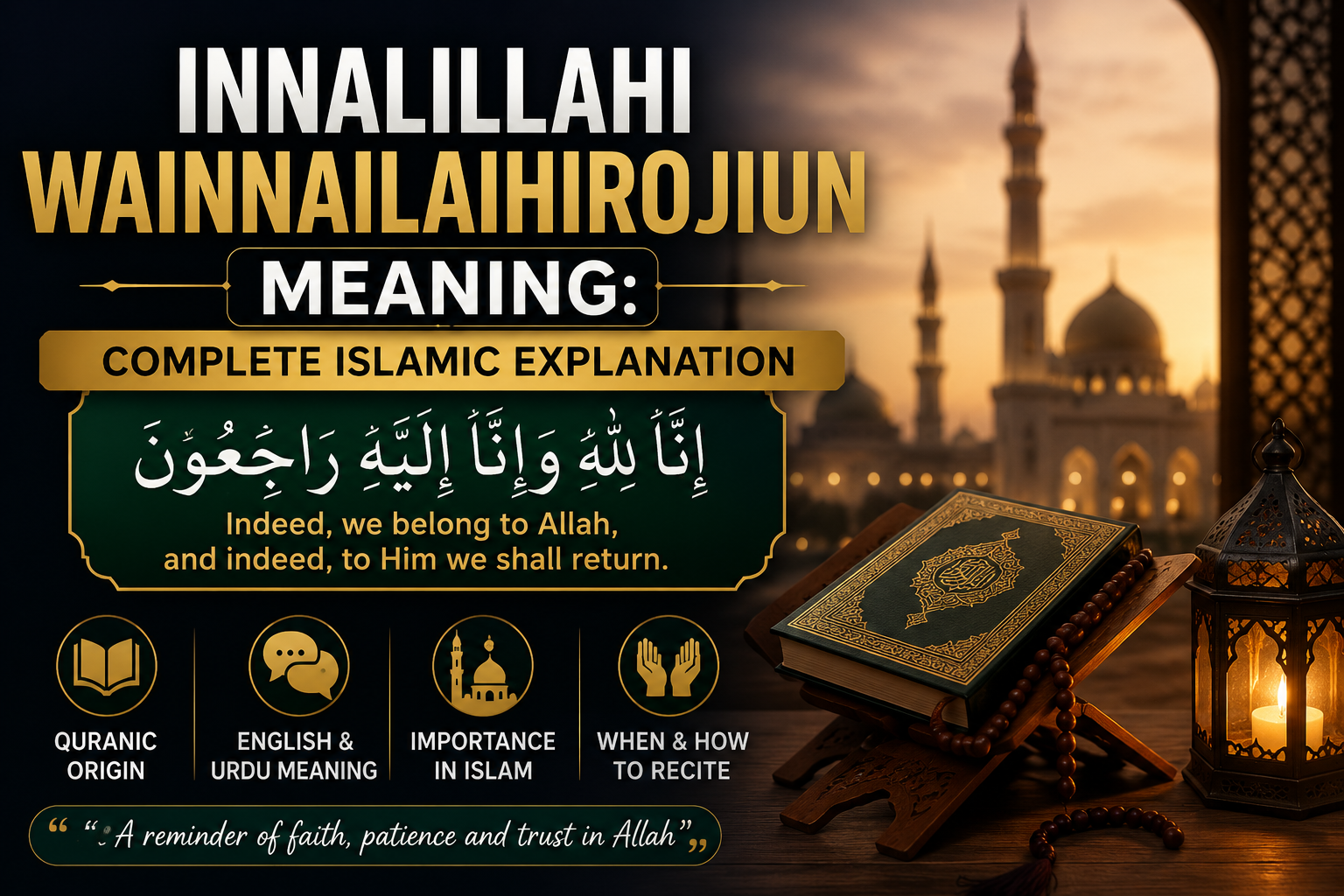
The phrase innalillahiwainnailaihirojiun is one of the most profound reminders in Islam. Muslims recite it during moments of loss, hardship, and sadness to express patience, faith, and complete trust in Allah. Although it is commonly associated with the death of a loved one, this beautiful Quranic phrase carries a much deeper meaning that applies to every trial a believer experiences.
Many people search for the innalillahiwainnailaihirojiun meaning to better understand why Muslims recite it during difficult times. In this guide, we will explore its Arabic text, English and Urdu meanings, Quranic origin, spiritual significance, and the lessons it teaches every believer.
What Does Innalillahiwainnailaihirojiun Mean?
The phrase innalillahiwainnailaihirojiun comes from the Holy Quran, specifically Surah Al-Baqarah (2:156).
Innalillahiwainnailaihirojiun in Arabic
إِنَّا لِلَّٰهِ وَإِنَّا إِلَيْهِ رَاجِعُونَ
This is the correct innalillahiwainnailaihirojiun in arabic text that Muslims recite when facing a calamity or hearing the news of someone’s passing.
Innalillahiwainnailaihirojiun Meaning in English
The innalillahiwainnailaihirojiun meaning in English is:
“Indeed, we belong to Allah, and indeed, to Him we shall return.”
This short sentence reminds believers that everything in this world—including our lives, families, wealth, and possessions—belongs to Allah. Since everything is His trust, we must accept His decisions with patience and gratitude.
It also reminds us that every human being will eventually return to Allah after death, where they will be accountable for their deeds.
Innalillahiwainnailaihirojiun Meaning in Urdu
The innalillahiwainnailaihirojiun meaning in Urdu is:
“بے شک ہم اللہ ہی کے ہیں اور بے شک ہمیں اسی کی طرف لوٹ کر جانا ہے۔”
یہ دعا مسلمانوں کو صبر، اللہ پر بھروسہ، اور آخرت کی یاد دلاتی ہے۔ یہ انسان کو یہ احساس دلاتی ہے کہ دنیا عارضی ہے اور ہر شخص نے آخرکار اپنے رب کے حضور حاضر ہونا ہے۔
Where Is Innalillahiwainnailaihirojiun Mentioned in the Quran?
Allah says in Surah Al-Baqarah:
“Who, when disaster strikes them, say, ‘Indeed we belong to Allah, and indeed to Him we will return.'”(Surah Al-Baqarah 2:156)
This verse appears after Allah mentions that believers will be tested through fear, hunger, loss of wealth, lives, and crops. Those who remain patient and remember Allah by reciting this phrase are promised His mercy and guidance.
When Should Muslims Recite Innalillahiwainnailaihirojiun?
Many people believe this phrase should only be recited after someone dies. While it is commonly used upon hearing news of a death, Islam teaches that it may be recited during any hardship or loss.
Examples include:
- The passing of a family member or friend.
- Receiving bad news.
- Losing wealth or property.
- Experiencing illness.
- Facing natural disasters.
- Any personal trial or calamity.
By saying innalillahiwainnailaihirojiun, a believer acknowledges Allah’s wisdom and accepts His decree with patience.
Innalillahiwainnailaihirojiun Dua and Its Importance
Many Muslims refer to this phrase as the innalillahiwainnailaihirojiun dua because it is recited during moments of grief and hardship.
Although it is primarily a Quranic verse rather than a standalone supplication, reciting it is an act of worship that reflects complete submission to Allah’s will.
The Prophet Muhammad ﷺ encouraged believers to remember Allah during every hardship and trust His divine wisdom. Reciting this blessed phrase helps calm the heart and strengthens faith during life’s most difficult moments.
Spiritual Lessons Behind Innalillahiwainnailaihirojiun
The words carry timeless lessons that every Muslim should reflect upon.
Everything Belongs to Allah
Our lives, wealth, health, and loved ones are blessings entrusted to us by Allah. Since everything belongs to Him, He has the ultimate authority over every blessing He grants and every test He sends.
This World Is Temporary
The phrase reminds us that worldly life is not permanent. Every person will eventually return to Allah, making preparation for the Hereafter our greatest priority.
Patience During Difficult Times
Islam encourages believers to respond to hardship with patience instead of despair. Saying innalillahiwainnailaihirojiun helps believers remain calm and remember that every trial carries wisdom known only to Allah.
Hope in Allah’s Mercy
Even in moments of sorrow, this Quranic phrase reminds Muslims that Allah is Most Merciful. Every hardship can become a source of forgiveness, spiritual growth, and immense reward for those who remain patient.
Why Is This Phrase So Powerful?
One reason this Quranic expression has remained so meaningful throughout history is because it shifts a believer’s perspective. Instead of asking, “Why did this happen to me?” It encourages acceptance by reminding us that every blessing and every test belongs to Allah.
This mindset reduces despair and strengthens reliance on Allah during life’s greatest challenges.
For grieving families, these words offer comfort by reminding them that separation in this world is temporary and that every soul will eventually return to its Creator.
Common Misconceptions About Innalillahiwainnailaihirojiun
Several misunderstandings exist regarding this phrase.
One common misconception is that it should only be recited when someone passes away. In reality, the Quran associates it with any calamity or hardship.
Another misconception is that simply saying the words is enough. While recitation is highly rewarding, believers should also understand its meaning and sincerely accept Allah’s decree with patience and trust.
Final Thoughts
Understanding the true innalillahiwainnailaihirojiun meaning allows Muslims to appreciate one of the most comforting phrases in Islam. More than a response to death or tragedy, it is a declaration of faith, patience, and complete reliance on Allah.
Whether you recite innalillahiwainnailaihirojiun after hearing difficult news, during personal hardship, or while comforting someone who has experienced loss, these blessed words remind every believer of an eternal truth: we belong to Allah, and one day we will all return to Him.
May Allah grant us patience during every trial, strengthen our faith, and allow us to meet Him in a state that pleases Him. Ameen.